
| ex Vat | € 119,00 |
| in Vat | € 143,99 |
| Volume | Magnum |
| Classification | NV |
| Type | Sparkling |
| Producer | Ruinart |
| Vintage | NV |
| Country | France |
| Region | Champagne |
| Grape | Chardonnay |
| Volume | 0,75 |
| Condition | Perfect |
| Label | Perfect |
| Stock | 9 |
| Volume | 1,5 |
| Condition | Perfect |
| Label | Perfect |
| Stock | 0 |
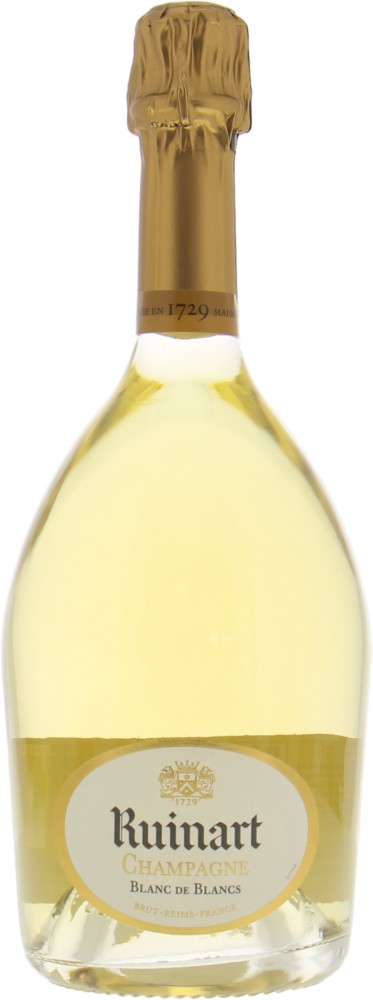
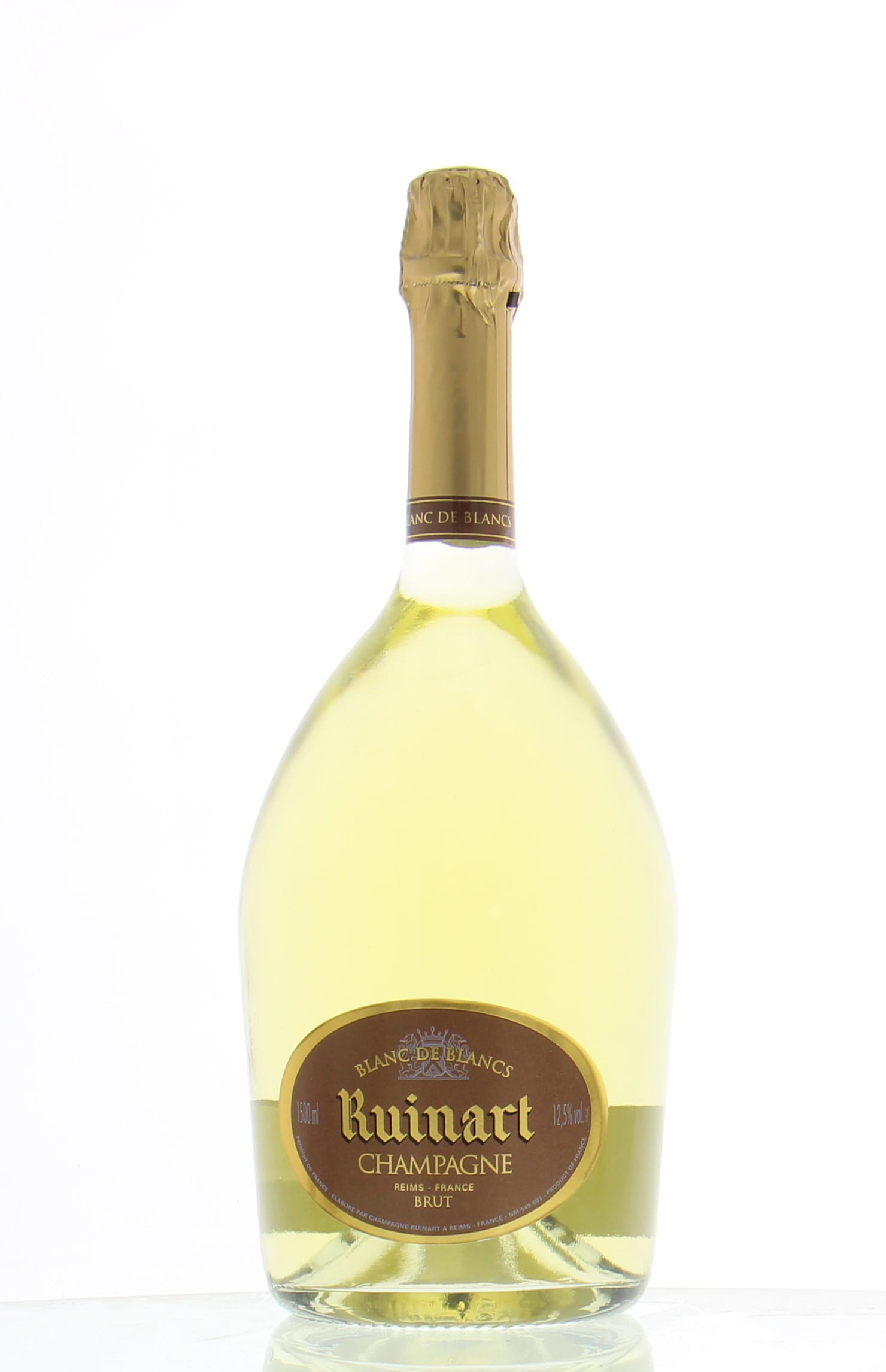
Ruinart Blanc de Blancs is the non-vintage calling card of the world's oldest Champagne house, and it plays the role that a Champagne NV should play, to recreate the flavors of Ruinart year after year. Each release is blended with 20-25% of reserve wines from previous vintage years in the base vintage. As a result, the notoriously fickle nature of Champagne is smoothed out. What pours into the glass is the house style, not a snapshot of a single growing season.
This is a fabulous version of Ruinart’s NV Brut Blanc de Blancs. The wine seems fresher, more vibrant and less obviously sweet than in the past, all of which makes this a far more interesting wine. The trademark profile of lemon, jasmine and green apples is very much in the forefront while the wine’s textural finesse and length are both first-class. This release of the NV Brut makes a great introduction to the wines of Ruinart, Champagne’s oldest house.
Beautifully balanced and refined in texture, this displays exotic ground spice and floral accents to the flavors of poached white peach, Meyer lemon and candied ginger, with hints of pastry and honey. Offers a lasting, mouthwatering finish.
The first thing you notice is the citrus. Lemon zest, white peach and notes of pear. Then there are chalky, salty, almost stony notes that succeed better than anywhere else in Côte des Blancs Chardonnay. The mousse is fine and not aggressive. The palate is linear and dry. The brioche, ripe on lees, does not dominate the fruit, but rather is underneath it. The finish is clean, mineral and refreshing.
Ruinart's Blanc de Blancs is, as the name suggests, 100% Chardonnay. It does not use Pinot Noir or Meunier. The fruit comes from 20 to 25 cru:
Why this particular blend? The Côte des Blancs gives precision and chalk. The Montagne adds some weight. Together they create the elegance for which Ruinart is famous.
Drink it now. Ruinart's Blanc de Blancs NV is aged on lees in a chalk cellar for at least two years before release. But if you want to see the effects of aging in bottle, age it for three to five years. The chalky minerality becomes deeper and brioche notes emerge; store horizontally at 11-13°C.
Maison Ruinart was founded in Reims in 1729 and was the first commercial Champagne house in history. But the more interesting fact is that for almost 300 years they have remained committed to one thing: chardonnay. All cuvées are made primarily from chardonnay, and the house, owned by LVMH since the 1960s, produces about two million bottles a year in its chalk cellars, located 38 meters underground in Reims, a UNESCO World Heritage Site since 2015. The consistency of production has made Ruinart one of the most reliable houses in Champagne.
Champagne is located at about 48° latitude, in the northern part of the region, where the vines struggle to ripen. It is saved by chalk. The chalky subsoil of belemnites and micrasters, remnants of an ancient inland sea, quickly drains rainwater and retains heat from day to night. This gives Chardonnay its firmness and salinity. Côte des Blancs (pure chalk, east-facing slopes) is the spiritual home of this grape. Montagne de Reims in the north adds structure: two different chalks, one house style.
The approach to production is deliberately pure. The grapes are gently pressed and fermented in stainless steel (no oak is used at all), malolactic fermentation is completed and acidity moderated. An assemblage is then made and 20-25% reserve wine from the previous vintage is added to the base wine. Secondary fermentation takes place in bottle, followed by lees aging for a minimum of two years in chalk cellars at 11°C. The dosage is kept at a moderate level of around 9 g/l to allow the chalky character to develop.
Pure Chardonnay, low dosage, sharp acidity. A pairing profile for lovers of the sea. Taste:
The acidity reduces the salt and fat content, and the chalky minerals echo the brine of the shellfish. Serve not in a flute, but in a white wine glass at 8-10°C.
With track & trace code