
| Classification | Cru Classe |
| Type | Red |
| Producer | Kaesler |
| Vintage | 2016 |
| Country | Australia |
| Region | South Australia |
| Alcohol % | 14.5% |
| Volume | 0,75 |
| Condition | Perfect |
| Label | Perfect |
| Drinkable | -2036 |
| Stock | 13 |
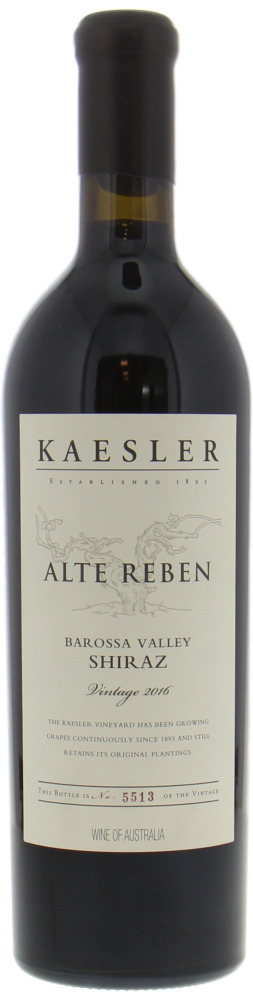
The 2016 growing season in the Barossa Valley was warm, dry and early, resulting in concentrated, deeply flavored shirazes throughout the region. For Kaesler's Alte Reben wine, harvested from old vines in Kaesler's own vineyard in Nuriootpa, the shiraz berries were small and very ripe. The result is a wine with the density of dark fruit that the 2016 Barossa is famous for, but with the structure that old vines bring. This is a wonderful vintage.
Coming from a 117-year-old vineyard in the Marananga sub-region of the Barossa Valley, this is a barrel sample of the 2016 Alte Reben Shiraz. "2016 was a gift," winemaker Reid Bosward informed me. "You don't get many vintages with above average yields and good quality." This wine delivers gorgeous purity of fruit, with a beautiful floral perfume over a core of crushed blackberries and Bing cherries. The palate is already remarkably balanced with ripe, rounded tannins and wonderful length.
A wild and gently meaty edge here with a dark-berry core and a very assertive blackcurrant and purple-flower edge. The palate has such depth and velvety, rich tannins that it casts a very long, plush and rich finish.
The first impression is one of depth. Blackberries, dark plum and chocolate glaze, underneath which lurks something more savory, hints of licorice, black pepper and jerky. French oak (hogshead, more than barrique) shows up in the form of cedar and baking spices rather than an overabundance of vanilla. The flavor is full-bodied but not heavy, with fine-grained tannins from old Nuriootpa vines and a long, peppery finish. This wine is drinkable now, but the structure suggests it will continue to develop with age.
Drink between 2024 and 2036. The tannins are still firm, the acidity maintains fruitiness; store horizontally at 12-14°C. With time, the primary blackberry transitions to dried figs, leather and tobacco.
Kaesler Estate is located on one of Australia's oldest vineyards and was given to the Kaesler family in 1893. Why the estate is so important today: in 1999, Reid Bosward and Ed Peter bought the old, neglected vines and set about restoring them. The 1893 shiraz plot is still fruiting. Best of Wines offers Kaesler because few producers in the Barossa combine such vineyard depth with winemaking precision.
In Kaesler's home neighborhood, the soils are sandy clay loams with limestone underneath. Why is this important? Because the Barossa is hot and dry (annual rainfall is around 500 mm) and this clay layer holds moisture when the vines need it. The vineyards are dry-farmed without irrigation, with vines grown as bush vines. This allows for deep rooting, which is ideal for Shiraz of this concentration. Marananga, located on the western slope of the valley, gives structure and tannins to the wine.
A crucial choice at Kaesler is to keep each plot with old vines separate until the final blending, because the 1961 plot is different in flavor from the 1930s plot, and Reid Bosward wants to hear what each has to say before blending the wines. The grapes are hand-harvested, destemmed and fermented in open-top vats. Aging takes place in French oak barrels, which are larger than barriques (standard 225-liter barrels from Bordeaux), so the oak influence is present but not so expressive.
Big Barossa Shiraz needs fat and charcoal to balance the tannins and ripe fruit. Taste:
Serve at 17-18°C. Decant one hour before serving.
With track & trace code