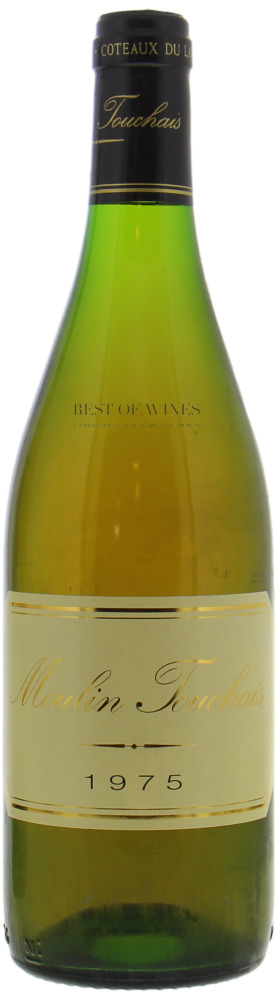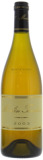

| Classification | Cru Classe |
| Type | Sweet |
| Producer | Moulin Touchais |
| Vintage | 1975 |
| Country | France |
| Region | Loire |
| Grape | Chenin Blanc |
| Alcohol % | 13.5% |
| Volume | 0,75 |
| Condition | 2020 release directly from Moulin Touchais |
| Label | Perfect |
| Stock | 4 |
The 1975 growing season in the Loire was cool and wet, and sweet wine producers along the Layon had a tough time. Botrytis was very prolific that fall. Several harvests were made at Moulin Touchais to salvage as many concentrated grapes as conditions allowed. Half a century later, in 1975, Moulin Touchais did what Moulin Touchais wines do best.
Pouring the 1975 wine, the first thing you notice is that it has matured well. In the glass it has a deep amber color. The nose goes well beyond fresh fruit and into the notes of quince paste, dried apricots, beeswax, and saffron and marmalade that Chenin Blanc has been developing for decades. The acidity supports the flavors. It is still bright and cuts through the residual sugar. The finish is honeyed, with faint bitter orange tannins. Drink now.
Coteaux du Layon is 100% Chenin Blanc, and the single grape rule is very important here. Thanks to the natural acidity of Chenin, the sweet 1975 wine comes alive in the glass. It is known locally as Pinot de la Loire. At Moulin Touchais, the grapes are harvested from the Tigné, Martigné-Briand and Marigny plots, with up to four passes to achieve a balance between ripe and overripe fruit.
The 1975 wine is ready to drink. A well-preserved bottle is still drinkable; store it upright in a light-protected place at 12-14°C. Note the changes in the bottle. This is characteristic of wines of this age.
Most producers prefer to keep their wines on the market radar. Moulin Touchais is the exact opposite. After World War II, Joseph Touchais decided to create a domaine. For a minimum of 10 years. The cellars of the Doué-la-Fontaine hold about a million bottles dating back to the 1960s or earlier. It is one of the most unusual library projects in France. The Touchais family, now in its eighth generation, has run the business since 1787.
The Coteaux du Layon site is located on a south-facing slope above the River Layon, a tributary of the Loire, south of Angers. The clay and limestone soils give the wine structure and mineral character. But the real magic lies in the microclimate. Cold, misty mornings from the river and hot, dry afternoons. This is the climate that fosters noble rot, which causes the berries to shrivel and concentrate sugar and flavor. Botrytis is less aggressive on the Touchais plot than in neighboring vineyards. This is why the wines are not syrupy and remain balanced.
The harvest takes place in four stages. First stage: grapes of normal maturity are harvested to obtain an acid base. Next stage: overripe and nobly rotten bunches are harvested to increase sugar and concentration. Soft pressing and spontaneous fermentation with indigenous yeasts at controlled temperature. Fermentation can continue until January. The wine is bottled in late winter to preserve freshness and goes underground for a minimum of 10 years. No new barrels, no gimmicks. Just take your time.
Sour-sweet wines open more doors than people realize. A few ideas:
Serve at 8-10°C. If the temperature is too low, the flavors will be muted.
With track & trace code